Episode #32: Designing Accessible Products and Leading Remote Teams with Raitis Linde
Raitis Linde explains how physical design, accessibility, validation, and people-focused leadership can improve products and remote design teams.

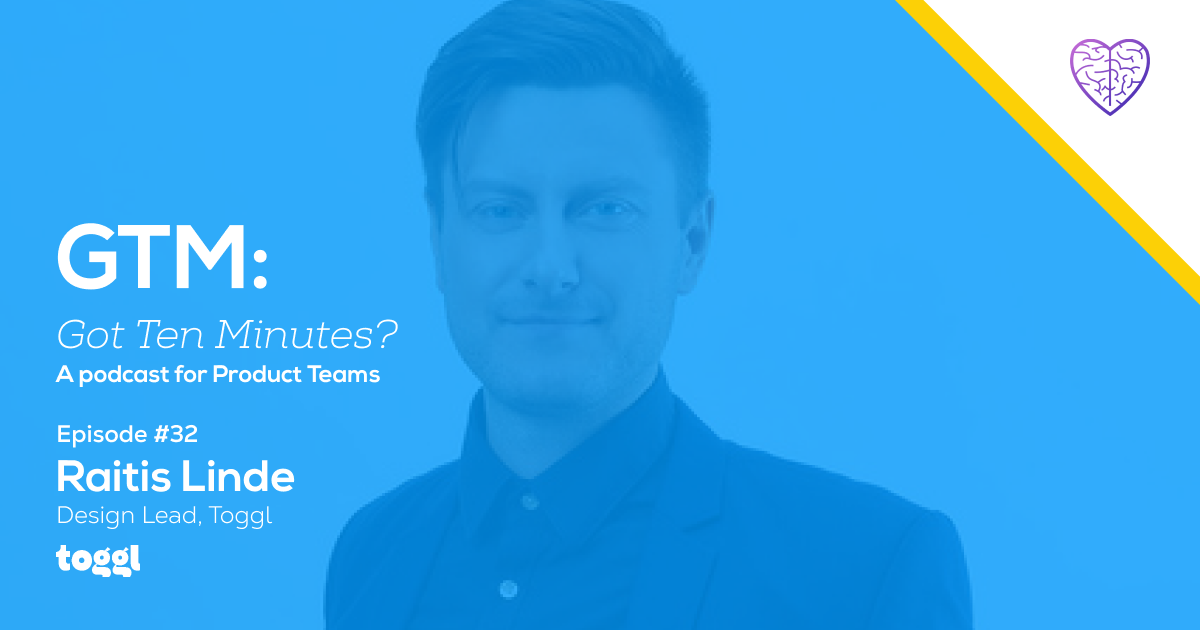
Good design leadership is not only about reviewing screens. It is about creating the conditions in which designers can learn, test decisions, and show whether their work helped users. In Episode #32, Raitis Linde, design lead at Toggl Track, connects that responsibility to lessons from physical product design, accessibility, experimentation, and remote teamwork.
What you'll learn
What physical products can teach digital designers about feedback and interaction
Why accessibility is useful beyond permanent impairments
How a design lead can support a distributed team without controlling every decision
How validation sessions and A/B tests make design impact more visible
Why aspiring UX designers should learn by making and testing things
Look beyond the screen for interaction lessons
Linde's path into UX moved through systems analysis, sales, digital marketing, development, and a product design degree in Denmark. That degree focused heavily on tangible products, including electronics and woodworking. Although this was outside his digital comfort zone, it gave him experience involving stakeholders and considering how people interact with objects in the physical world.
Physical and digital products differ in how quickly they scale and in the feedback they provide. A physical button can tell someone through touch that it has been pressed. A screen usually has to communicate state in another way. Linde recalls a study assignment that required interaction using only the feet. His group built a musical device whose elements could be stomped. The unusual constraint exposed how easily screen-based design narrows attention to hands, fingers, and eyes.
For digital teams, the practical insight is to examine the full interaction rather than only the visible interface. Ask what feedback confirms an action, which abilities the design assumes, and whether another input or signal could make the experience clearer.
Treat accessibility as a general design concern
Linde sees growing attention to inclusive design and accessibility as a positive change in the industry. Accessibility is not relevant only to a fixed group of users. Vision or another ability can be impaired permanently or temporarily, and circumstances can change how anyone uses a product.
That view shifts accessibility from a late compliance check to an ordinary product question. Teams can consider whether users receive enough feedback, whether an interaction depends too heavily on one sense or input method, and how a product behaves when normal conditions are interrupted. The goal is not to predict every situation. It is to avoid defining the user too narrowly and to recognize that accessible choices can make a product more usable for everyone.
Lead a remote design team by creating space
Toggl Track serves teams and solo users with time-tracking and planning software. At the time of the conversation, Linde estimated that the fully remote company represented more than 40 countries and served users around the world. That setting requires asynchronous collaboration across time zones and design work that can operate at scale.
Linde describes his product as his team. His role is people-focused: provide a space where effective design can happen, then support and mentor designers so they can increase their impact. The difficult balance is knowing when to get involved and when to step back. Too much intervention can remove learning opportunities, while too little support can leave people blocked. He relies on feedback to adjust that balance.
He also looks beyond immediate requests to design operations. A team can become consumed by current needs, so a lead must consider how the company may grow, what pressures that growth will create, and which operating practices need to become more robust and scalable.
Make design impact visible, then keep experimenting
Because design can feel subjective, Linde's team uses evidence to understand whether a solution made a positive difference. Its methods include moderated and unmoderated testing, face-to-face conversations, design validation sessions, and experiments. Collaboration with a growth team adds A/B testing and another way to measure how design ideas perform.
A validation session can provide early signals about whether an idea has potential or needs more work. An experiment can then connect a design decision to observed behavior. This evidence helps a team improve the work and makes its contribution visible, which matters to designers who want to understand the impact they are making.
Linde offers the same experimental mindset to people entering UX. Redesign something that feels unusable, make it better, and notice which part of the process holds your attention. You may prefer finding problems through conversation, designing solutions, or building support around implementation. Making things is a way to discover that fit.
Listen to Episode #32 for Raitis Linde's full discussion of physical and digital interaction, inclusive design, remote leadership, design operations, and learning UX through practical experiments.
Continue with the workflow pages
Use the ideas from this episode inside the selector, Playwright, and bug-reproduction pages that connect content to product intent.
 Install the Chrome Extension